
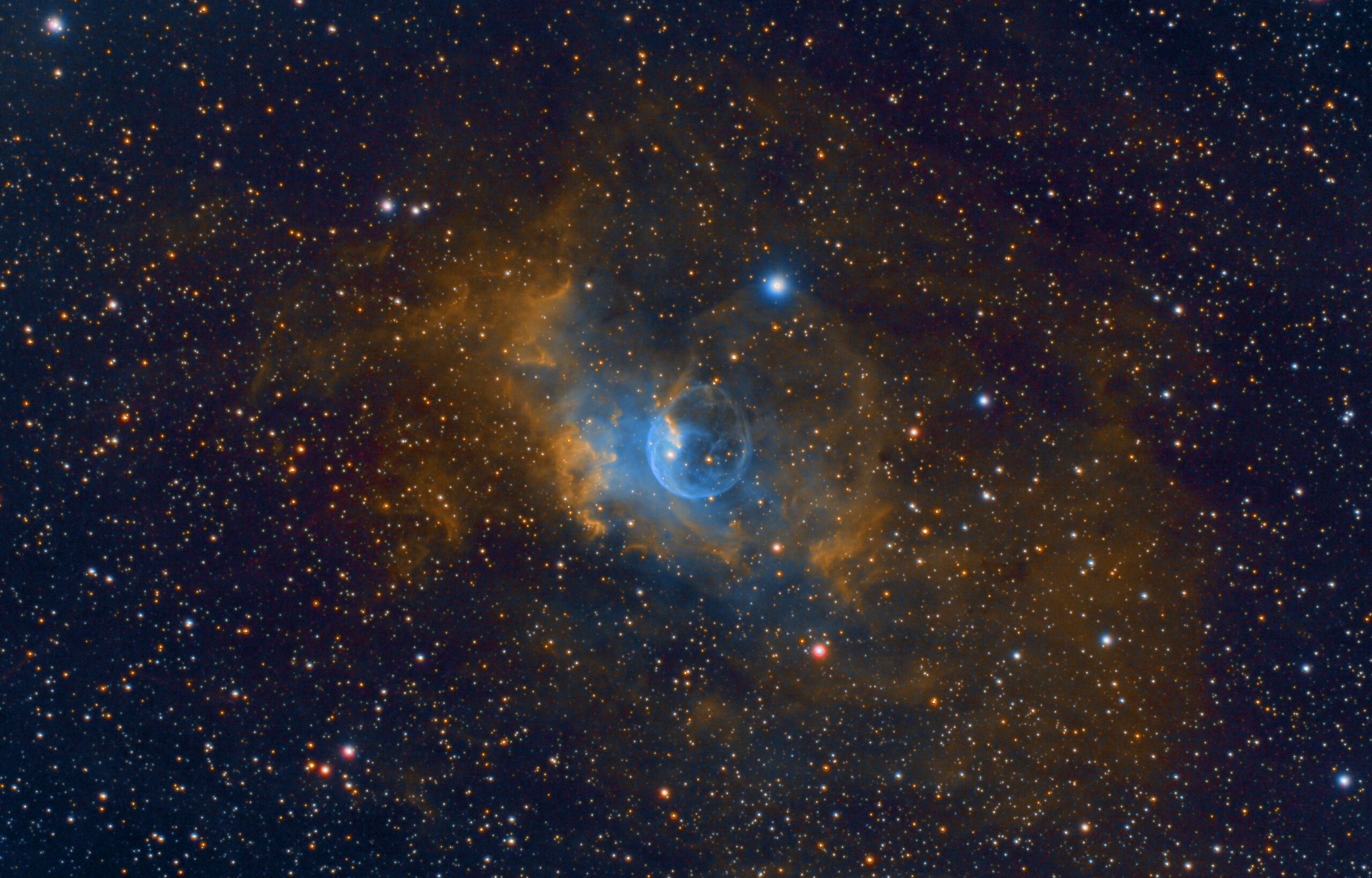
✨ Constellation: Cassiopeia
🚀 Distance: 7,100-11,000 Light Years
🔭 Equipment: ZWO ASI294MM Pro Monochrome Cooled Astronomy Camera, ZWO ASI174MM Mini Guide Camera, ZWO ASIAir Plus Acquisition and Power Management Computer, Antlia 3nm Narrowband Hydrogen Alpha Pro Filter 2″, Antlia 3nm Narrowband Oxygen III Pro Filter 2″, Antlia 3nm Narrowband Sulfur II Pro Filter 2″, Celestron EdgeHD 8″ Schmidt Cassegrain, Celestron Reducer Lens .7x – EdgeHD 800, iOptron CEM60 Center Balanced Equatorial Mount, iOptron Permanent Pier, Celestron Aluminum Dew Shield with Cover Cap – 8″, Primalucelab Alto-2 Telescope Cover Motor, Primalucelab GIOTTO 255 Smart Flat Field Generator, Celestron Deluxe Off-Axis Guider, ZWO EFW (Electronic Filter Wheel) 7 x 2″
📅 Session: August 17, 2021 (Ha) September 4-6, 2021 (OIII & SII)
📸 Exposure: Ha Frames: 40 x 300s OIII Frames: 26 x 300s SII Frames: 26 x 300s Total Integration Time: 7.6 Hours
💻 Software: Astro Pixel Processor, Pixinsight