
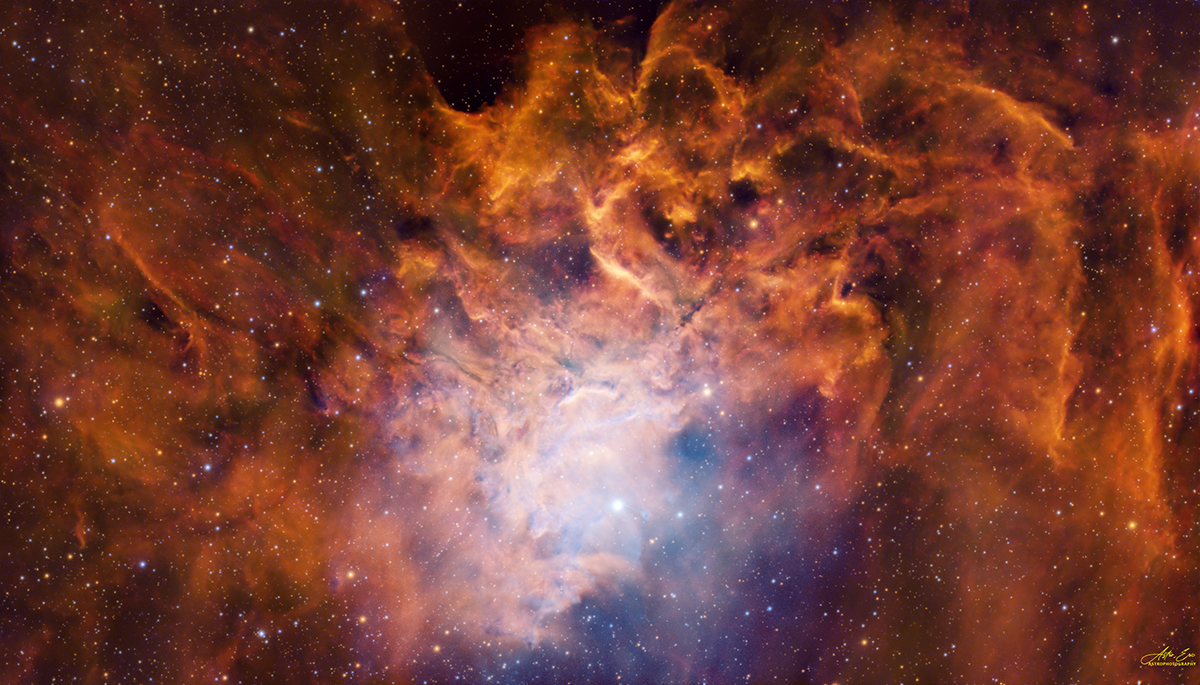
✨ Constellation: Auriga
🚀 Distance: 1,500 Light Years
🔭 Equipment: Altair Astro Hypercam 585M Mono TEC Cooled USB3 Astronomy Camera, Antlia Edge 4.5nm Narrowband Hydrogen-Alpha Filter 1.25″, Antlia Edge 4.5nm Narrowband Oxygen III Filter 1.25″, Antlia Edge 4.5nm Narrowband Sulfur II Filter 1.25″, Antlia LRGB-V Pro series filters – 1.25”, iOptron CEM60 Center Balanced Equatorial Mount, iOptron Permanent Pier, MeLE Fanless Mini PC Quieter3C, Pegasus Astro USB Control Hub, Primalucelab Alto-1 Telescope Motor Cover, Primalucelab Giotto 120 Smart Flat Field Generator, William Optics Flat 68III Field Flattener, William Optics Fluorostar 91, ZWO ASI224MC One-Shot Color USB3 Planetary/Guiding Camera, ZWO CAA Camera Angle Adjuster, ZWO EAF Electronic Focusing Motor, ZWO EFW (Electronic Filter Wheel) 8 x 1.25″, ZWO f/5 30mm Mini Guide Scope
📅 Session: December 20, 21, 25, 2025 - Ha December 20, 21, 24, 30, 2025 - OIII & SII
📸 Exposure: Light Frames: Hydrogen Alpha (Ha): 46 x 300s Sulfur 2 (SII): 63 x 300s Oxygen 3 (OIII): 85 x 300s Calibration Frames: 30 Flat Frames per Filter, 40 Dark Frames, 60 Bias Frames Total Integration Time: 16.2 Hours
💻 Software: Nighttime Imaging ‘N’ Astronomy, PHD2 Guiding, Pixinsight