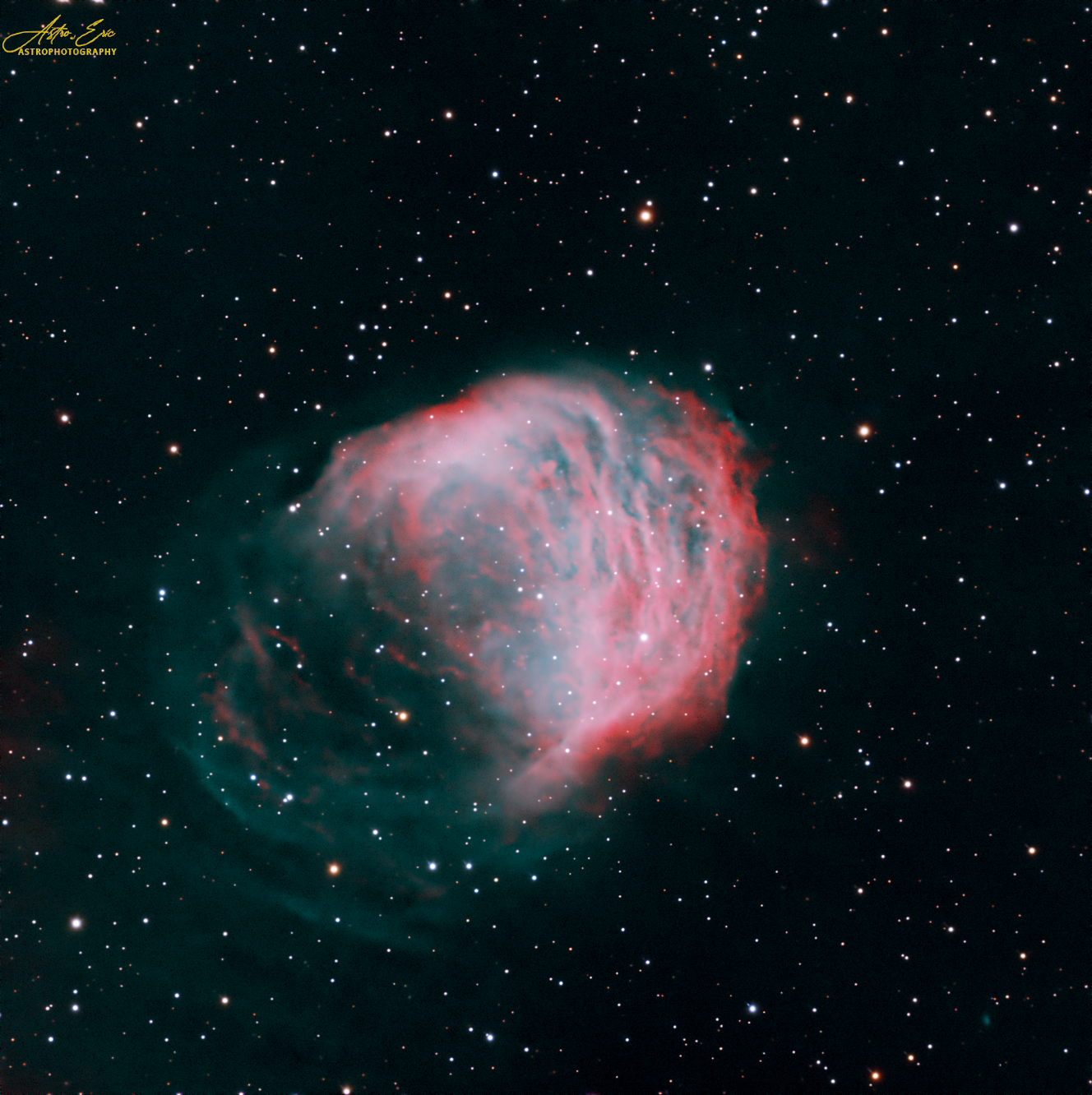
🖼️ View Full Resolution
✨ Constellation: Gemini
🚀 Distance: 1500 Light Years
Type: Old Planetary
The Medusa Nebula, a substantial planetary nebula, spans approximately one-third of the diameter of a full moon. Initially identified by George O. Abell during the 1950s, it was cataloged as the 21st item in his list. Its name, "Medusa," stems from its resemblance to a jellyfish, characterized by intricate, sinuous filaments. Interestingly, the nebula's spectrum exhibits a relatively subdued emission in O-III compared to the norm, as H-alpha appears roughly twice as intense.
🔭 Equipment: Antlia Edge 4.5nm Narrowband Hydrogen-Alpha Filter 1.25″, Antlia Edge 4.5nm Narrowband Oxygen III Filter 1.25″, Antlia LRGB-V Pro series filters – 1.25”, ZWO ASI533MM Pro Cooled Monochrome Astronomy Camera, ZWO ASI174MM Mini Guide Camera, MeLE Mini PC Quieter 4C, Celestron Deluxe Off-Axis Guider, Celestron EdgeHD 8″ Schmidt Cassegrain, Celestron Reducer Lens .7x – EdgeHD 800, iOptron CEM60 Center Balanced Equatorial Mount, iOptron Permanent Pier, Pegasus Astro Pocket Powerbox Advanced G2, Primalucelab GIOTTO 255 Smart Flat Field Generator, Primalucelab Alto-2 Telescope Cover Motor, Primalucelab Essato 2″ LP Low Profile Robotic Focuser, ZWO EFW (Electronic Filter Wheel) 8 x 1.25″
📅 Session: February 28-29, March 2, 10, 11, 2024
📸 Exposure: Red: 30×60″(30′)
Blue: 30×60″(30′)
Green: 30×60″(30′)
H-alpha: 62×300″(5h 10′)
OIII": 65×300″(5h 25′)
Total Integration: 12h
💻 Software: Nighttime Imaging ‘N’ Astronomy, PHD2 Guiding, Pixinsight